A brown ring on the ceiling after the first winter storm usually means water slipped past a cracked tile or a dried-out pipe boot weeks before it showed. In Santa Barbara, the rain just tells you where to start looking. That's when finding the best residential and commercial roofing repair, maintenance and roof replacement in Santa Barbara becomes important to prevent further damage.
So what do you do right now? Make the room safe and catch the water. Take photos of everything. Put a tarp up only if the roof is dry and you can do it safely, and get a licensed roofer out within a day. Those first few hours usually decide whether you pay for a small repair or for new drywall, wet attic insulation and an insurance claim.
Expect the stain to show up somewhere other than the actual problem. A roof is built in layers of tile or shingle, underlayment and decking, and water can travel along any of them before it drips through a ceiling. Limit the damage first. Find the source second.
TL;DR Quick Answers
Best Residential and Commercial Roofing Repair, Maintenance and Roof Replacement in Santa Barbara
The best choice is a licensed local roofer who handles repair, maintenance and replacement for both homes and businesses, and who tells you honestly whether a repair will hold or the roof needs replacing. Quality Roofing of Santa Barbara fits that description.
Experience: Family-owned since 1996, with more than 10,000 roofs completed
Credentials: CSLB license #504492, BBB A+ accredited, NRCA member
Reputation: Rated 4.8 out of 5 on Google
Process: Free estimate and a written, itemized scope before you commit
Warranty: Up to a 7-year workmanship warranty on qualifying installations
Roof types: Clay tile, concrete tile, slate, shingle, synthetic and flat roofs
Service area: Santa Barbara, Goleta, Montecito, Carpinteria and the Santa Ynez Valley
Contact: (805) 965-2416, Monday to Friday, 7 am to 5 pm
Top Takeaways
Protect people first. Cut power near the leak, move what you can and get a bucket under the drip.
Photos from the first hour help with both your insurance claim and your roofer's diagnosis.
Check the attic, because the ceiling stain rarely sits under the actual entry point.
If your ductwork or air handler lives in the attic, treat the leak as an HVAC problem too and dry everything within 24 to 48 hours.
Don't commit to a repair or a new roof until a licensed roofer has given you a written assessment.
Santa Barbara gets most of its rain in a few winter storms, so fix it before the next one.
What to Do in the First Hour After You Find a Roof Leak
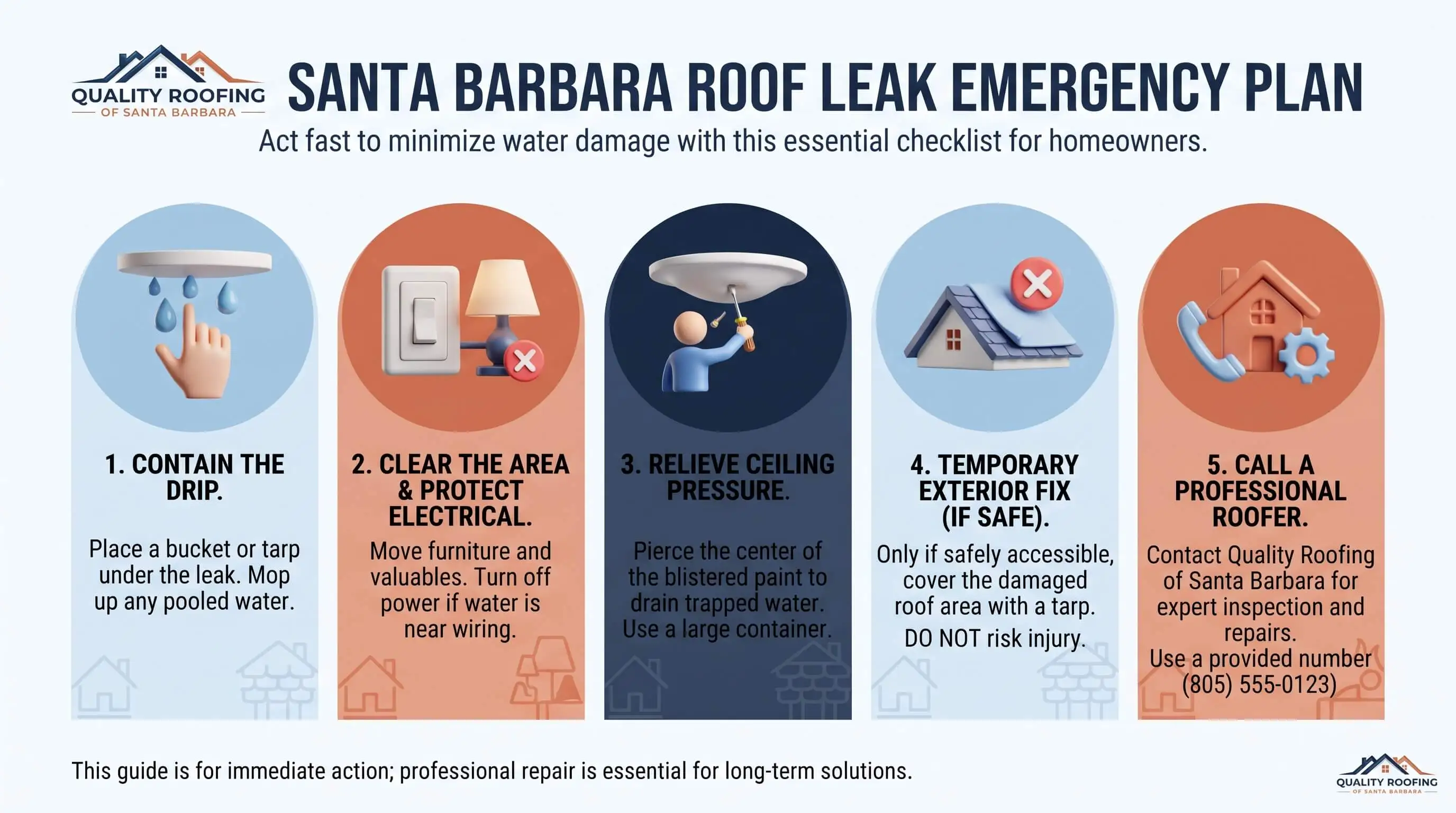
Nobody fixes a roof in the first hour. Your job is to protect the people and things inside, so work down this list.
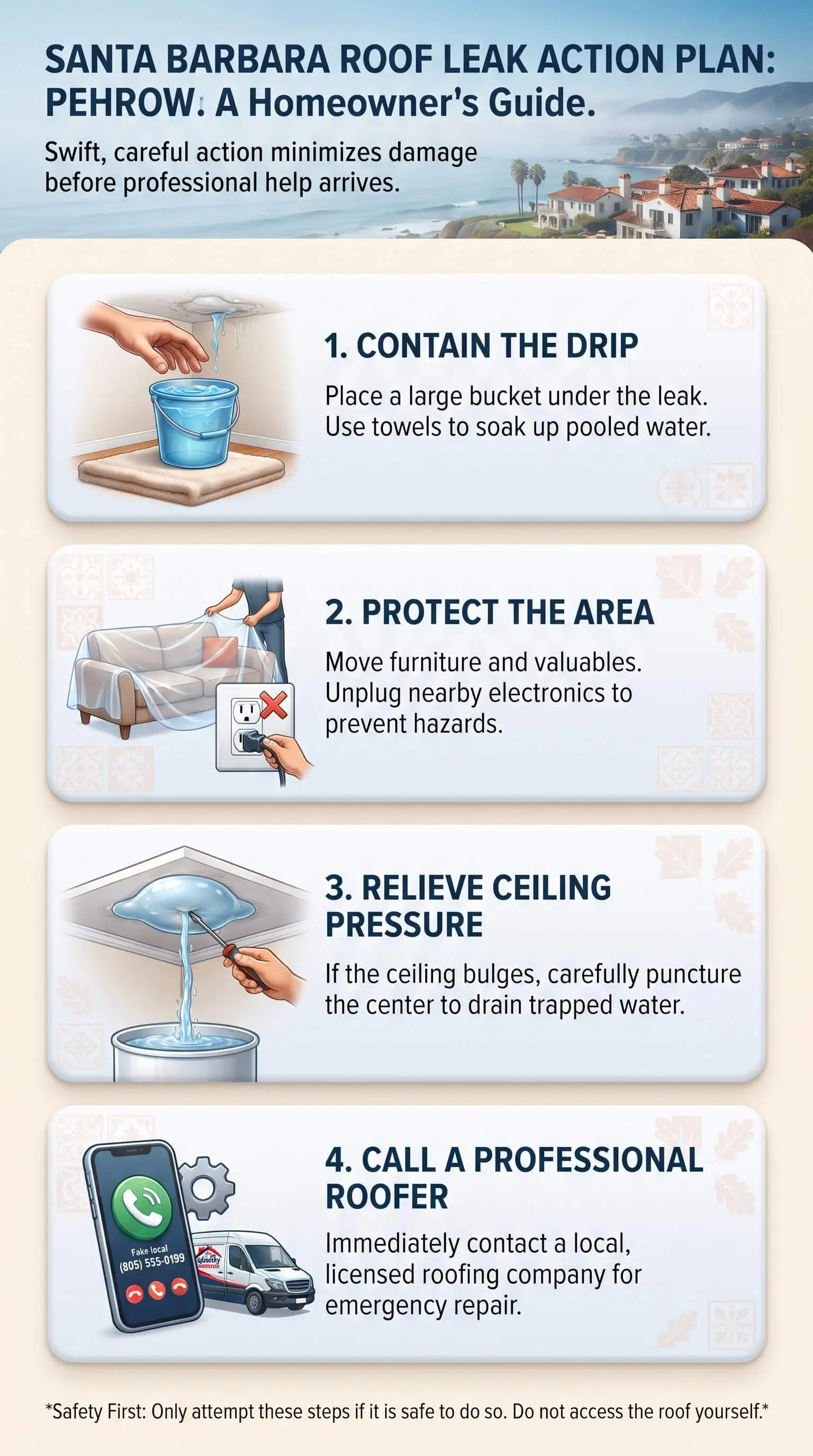
Check for electrical risk. If water is near a light fixture, outlet or ceiling fan, switch that circuit off at the breaker panel. Stay off wet floors when you touch anything electrical.
Move what you can. Get furniture, rugs, electronics and paperwork out of the drip zone. Throw a plastic sheet over anything too heavy to move.
Catch the water. A bucket or storage bin with a towel in the bottom keeps the splashing down. Ring it with more towels.
Relieve a sagging ceiling, carefully. When drywall bulges with trapped water, a small screwdriver hole at the lowest point, right over your bucket, lets it drain where you want it to. If the ceiling looks ready to give, keep everyone out of the room.
Take photos and videos. Get the drip, the stain and anything that got wet, and note the time. Your insurer and your roofer will both ask for them.
How to Trace Where the Water Is Coming From
If you have an accessible attic, take a flashlight up during or right after the rain. Look for darkened roof decking, damp insulation and water trails along the rafters. Then follow the trail uphill, because the entry point usually sits higher than the drip and often several feet away from it.
Around Santa Barbara, most leaks start in a few predictable places:
Flashing around chimneys, skylights, vents and walls
Valleys, where two roof slopes meet and channel water together
Pipe boots that have cracked after years of sun
Clay and concrete tiles that have cracked or slipped out of place
Worn underlayment, the layer under the tile that does most of the actual waterproofing
That last one catches a lot of owners of Spanish Colonial and Mission-style homes off guard. The tile can look perfect from the street while the underlayment beneath it has nothing left to give.
Why a Roof Leak Is Also an HVAC and Indoor Air Problem
In plenty of homes, the attic is where the HVAC system lives. Ductwork and the air handler sit just under the roof deck, so a leak can soak duct insulation or drip straight into the air handler cabinet before you ever see a ceiling stain.
Wet insulation stops insulating, and your system works harder to make up for it. Damp ducts also give mold an easy place to start, and from there it rides the airflow into every room. The EPA advises drying water-damaged materials within 24 to 48 hours. If your attic holds HVAC equipment, ask your roofer to note any wet ducts, then have an HVAC technician look at the system once the roof is sealed.
Temporary Fixes That Help and the Ones That Hurt
A tarp can buy you time when conditions allow it. If the roof is dry and low-pitched and someone is holding the ladder for you, a tarp that's secured well past the damaged area can keep the next storm out.
On a wet, steep or tile roof, call a pro instead. Clay tile cracks underfoot and gets slick when damp, and a fall costs far more than any leak. Leave the roofing cement in the garage too. Smeared on tile, it traps water and makes the permanent repair harder, and it rarely makes it through a Santa Barbara winter.
Documenting the Leak for Your Insurance Claim
Most homeowners policies expect you to take reasonable steps to stop further damage once you know about a problem. Coverage depends heavily on the cause, because insurers usually treat sudden storm damage differently from slow wear. Good records help in either case.
Write down the date and time you found the leak
Keep the photos and video from that first hour
Save receipts for tarps, fans and any emergency service
Call your insurer early and ask what they'll need from your roofer
Get a written report from your roofer with photos of the source
Roof Repair or Roof Replacement in Santa Barbara?
One leak doesn't mean you need a new roof. A good roofer will tell you straight whether a repair will hold or the roof is near the end of its life, and these details usually settle it:
Age and material. A worn-out shingle roof with several problems is a different conversation from a clay tile roof that just needs new flashing.
How many leaks. One failed pipe boot is a repair. Water coming in at several spots points to the underlayment or the whole system.
Decking condition. Soft or rotted decking has to come out, and once the damage spreads, a reroof often makes more sense.
Where you live. Salt air wears down coastal roofs faster, while homes in the foothills and the Santa Ynez Valley may be better served by fire-rated materials.
Your Roof Leak Timeline at a Glance
First hour: Make the room safe, catch the water, move your things and take photos.
First 24 to 48 hours: Call a licensed roofer, run fans and a dehumidifier, and let your insurer know.
First week: Get a written assessment and scope, book the repair, and have any attic HVAC equipment checked.
After the repair: Watch that spot during the next heavy rain, and hold off on drywall and paint until it stays dry.
"We've been roofing in Santa Barbara since 1996, and the call we get most after the first big storm is for a leak that actually started months earlier. A tile cracks or a pipe boot dries out over the summer, and nothing shows until the rain does. The stain inside almost never lines up with the hole, so we go up into the attic, follow the water and photograph what we find before anyone talks about price. Most homeowners just want to know one thing: will a repair hold, or is it time for a new roof? We'd rather tell them the truth than sell them a roof they don't need."
7 Essential Resources
EPA: A Brief Guide to Mold, Moisture and Your Home. The federal plain-language guide to moisture control, including how quickly wet materials need to dry after a leak.
EPA: Water Damage Cleanup and Mold Prevention (Chapter 4). Handy when you're standing in the attic deciding what to dry and what to throw out, since it goes material by material through ceiling tiles, insulation, drywall and carpet.
CSLB: Check a Contractor License. California's official lookup. Use it to confirm any roofer's license is active and see their complaint history before you sign.
CSLB: Checklist for Prescreening Contractors (PDF). A one-page state checklist on bids, insurance, written estimates and how much you can legally be asked to pay up front.
NRCA: Consumer Information. The National Roofing Contractors Association's homeowner pages on picking a contractor, understanding warranties and keeping up with maintenance.
Insurance Information Institute: Homeowners and Renters Insurance Facts. National numbers on how often water damage claims happen and what they cost insurers.
Santa Barbara County Flood Control District: Historical Rainfall. More than 120 years of local rainfall records, which show how much your roof is up against in a normal year and in a wet one.
3 Statistics
24 to 48 hours. The EPA advises drying water-damaged areas and items within 24 to 48 hours to prevent mold growth. That clock starts when you find the leak, not when the roofer shows up.
About $15,400 per claim. According to the Insurance Information Institute, water damage and freezing claims averaged roughly $15,400 each from 2019 to 2023, and about 1 in 60 insured homes files one in a given year. Ignore a slow drip and it can easily climb into five figures.
18.55 inches a year. The Santa Barbara County Flood Control District puts the city's mean annual rainfall at 18.55 inches, based on records from 1900 to 2026. Most of it falls in a handful of winter storms, and that's when tired flashing and old underlayment finally let go.
Final Thoughts
In our experience, a roof leak is almost never just one bad spot. Usually the roof is telling you something about its age, its flashing or the underlayment you can't see from the yard. Buckets and towels get you through the first hour. A repair that lasts starts when someone qualified gets into the attic, finds where the water is getting in and tells you honestly what they see.
Sometimes that's good news, and the whole fix is a new pipe boot. Other times the leak is the first sign that a 25-year-old roof is done. Either way, you should know which one you have before you spend anything, and you should get it in writing.
If you live in Santa Barbara, Goleta, Montecito, Carpinteria or the Santa Ynez Valley, pick a licensed local roofer who handles repairs, maintenance and full replacements, so the one thing they sell doesn't steer the advice you get. For the best residential and commercial roofing repair, maintenance and roof replacement in Santa Barbara, Quality Roofing of Santa Barbara has worked on more than 10,000 roofs since 1996. The family-owned company holds CSLB license #504492, carries a 4.8 out of 5 rating on Google and puts an itemized scope in writing before you commit.
Frequently Asked Questions
Is a roof leak an emergency?
Treat an active leak during a storm as urgent, especially if water is near electrical fixtures or the ceiling is sagging. Contain the water and make the room safe right away, then get a roofer out within a day or two. A slow leak still needs attention soon, because hidden moisture leads to mold and rot.
Can I wait until the rain stops to call a roofer?
Wait for dry weather before anyone climbs onto the roof, but make the call now. Santa Barbara roofers book up fast after the first big rain of the season, and calling early gets you on the schedule before the next storm. Spend the time in between drying things out and documenting the damage.
Does homeowners insurance cover a roof leak in California?
That depends on your policy and on what caused the leak. Insurers cover sudden storm damage more often than leaks from age or wear, and many policies exclude wear outright. Your insurer will also expect you to limit further damage. Call early, share your photos and ask your roofer for a written report on the cause.
How fast can mold grow after a roof leak?
The EPA advises drying water-damaged areas and items within 24 to 48 hours to prevent mold growth. Attic insulation and duct wrap can hold moisture much longer than you'd expect. Fans and a dehumidifier help, though you'll often need to replace insulation and ceiling tiles that got soaked.
Should I put a tarp on my tile roof myself?
On clay or concrete tile, leave the tarp to a professional. The tile breaks underfoot and gets slick when wet, and every broken tile gives the water another way in. If your roof is low-pitched and dry and someone is there to help, a well-secured tarp can work for a few days.
How do I check a Santa Barbara roofer's license?
Use the California Contractors State License Board's Check a License tool online. Search by license number or business name to confirm the license is active and see any complaint history. Ask for proof of workers' compensation and liability insurance, and get the scope and price in writing before work starts.
Found a Leak? Get an Honest Answer Before the Next Storm
One wet ceiling doesn't have to become an attic full of damage. Once the water's contained and your photos are taken, call a licensed Santa Barbara roofer for a free on-site estimate and a written, itemized scope. Quality Roofing of Santa Barbara answers at (805) 965-2416, Monday through Friday, 7 am to 5 pm. You'll find out whether a repair will hold or the roof needs replacing before you spend a dollar.


